
The advent of rain followed by sunshine might seem like the perfect weather for your lawn. However, it’s also the ideal scenario for the growth of a cottony, reddish-hued lawn menace—Red Thread. This fungus can seriously mar the aesthetic of your turf, but don’t worry! With the right treatment, your lawn can bounce back to its lush self.
What is Red Thread?
Red Thread, scientifically known as Laetisaria fuciformis, is a type of fungus that primarily affects the blades of your grass. While it’s most commonly seen during wet summers and autumns—particularly when the soil lacks adequate nitrogen—it can, in fact, develop at any time of the year.
The grass types most susceptible to this lawn disease are red fescue (Festuca rubra), bents (Agrostis spp.), perennial ryegrass (Lolium perenne), and annual meadow grass (Poa annua). Infected areas typically present as light brown or bleached patches, varying in size from 7.5cm (3in) to 25cm (10in) in diameter.
Identifying Red Thread
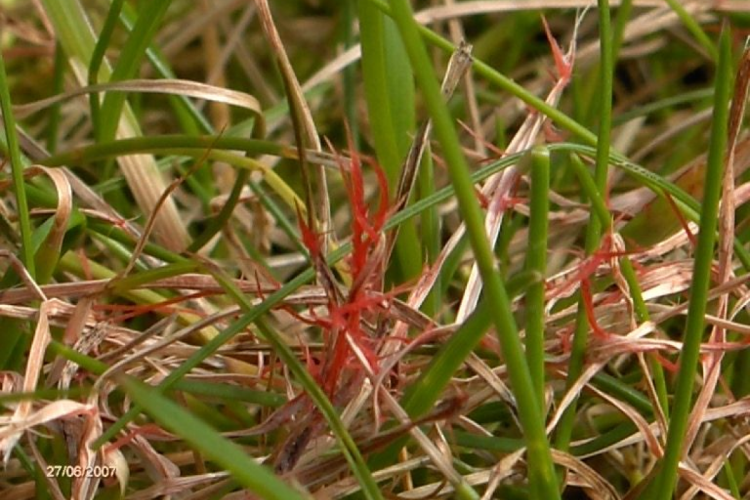
The telltale signs of this fungus are the eponymous slimy, pinkish-red threads binding to the grass blades. These thread-like strands or web areas of coral pink to blood-red hyphae protrude up to 2 cm upward from the blade tips and are easily visible to the naked eye. If you spot these, it’s crucial to seek professional help immediately.
How to Treat Red Thread?
Red Thread may be common, but it’s certainly not unbeatable. The key is in ensuring your lawn has sufficient nutrients and is adequately cared for.
Begin by ensuring your soil is well-fertilised. A nitrogen-rich soil creates an inhospitable environment for the fungus, preventing its spread and helping your grass to thrive.
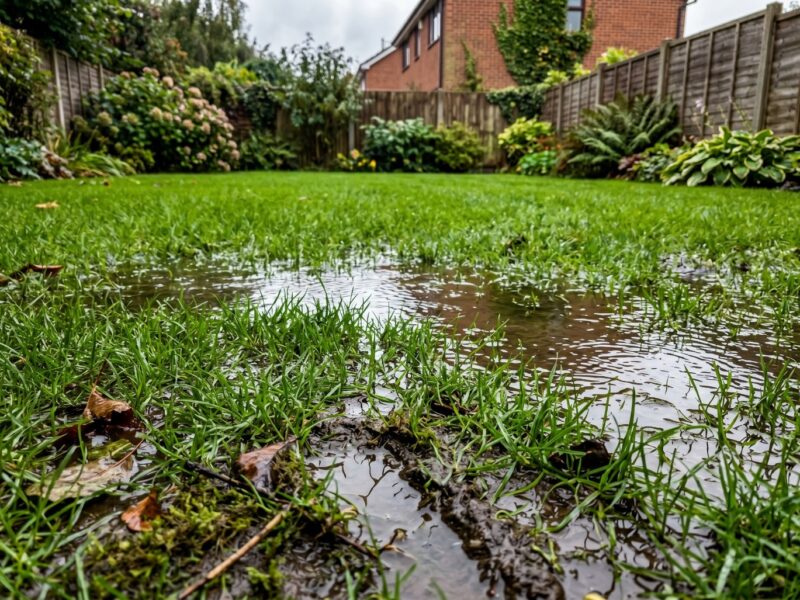
Proper soil drainage is another vital aspect. Soggy conditions can facilitate the growth of the fungus, so avoid overwatering and ensure that your lawn has good drainage.
Thatch—dead grass, roots, and debris—can create a layer that blocks water, air, and nutrients from reaching the grass roots. Regularly remove any thatch buildup to promote the overall health of your lawn.
After examining the current environmental factors, your Greensleeves lawn expert will advise on the best course of action to eradicate Red Thread from your lawn. Key treatments like scarification and hollow tine aeration provide great benefit to your lawn by enabling oxygen flow and reducing root pressure.
Preventing Red Thread
As is often the case, prevention is better than cure. Along with maintaining soil health and proper drainage, keep your grass from overheating. Avoid cutting it too short, as this can stress the grass and make it more susceptible to disease.
Moreover, ensure that your lawn receives adequate sunlight and airflow. A lawn in shade or with poor air circulation is more likely to develop fungus.
Red Thread may seem like a formidable foe, but with proper lawn care and the expert guidance of your local experts, it’s one you can readily conquer. By early identification and appropriate measures, Greensleeves can help you maintain a lush, healthy lawn that’s the envy of your neighbours. Red Thread might be an unwelcome guest, but it doesn’t have to be a permanent resident. Don’t let this fungus ruin your beautiful lawn—fight back with knowledge and the Greensleeves touch.