
A healthy lawn relies on proper drainage. When water cannot move through the soil effectively, lawns can quickly become waterlogged, patchy and difficult to maintain.
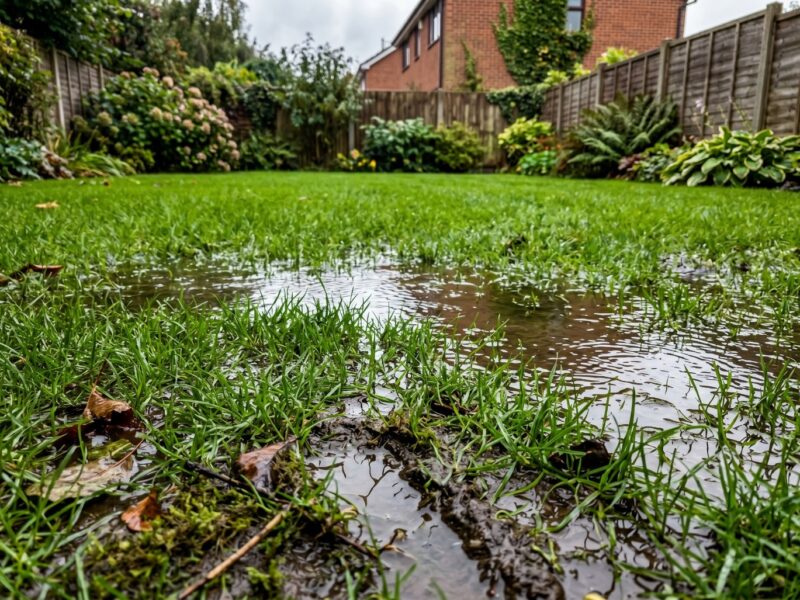
Poor lawn drainage often leads to standing water, muddy areas, weak grass growth and increased moss build-up. Over time, excess moisture can damage the health of your lawn and make outdoor spaces far less enjoyable to use.
Fortunately, there are several effective ways to improve lawn drainage and create healthier growing conditions for grass.
What Causes Poor Lawn Drainage?
Several factors can contribute to drainage problems in lawns, including:
- Compacted soil
- Heavy clay soil
- Uneven ground levels
- Excess thatch build-up
- Overwatering
- Poor lawn design or grading
Understanding the cause of the issue is the first step towards improving drainage and restoring lawn health.
Signs Your Lawn Has Drainage Problems
Poor drainage is not always obvious at first. Common signs include:
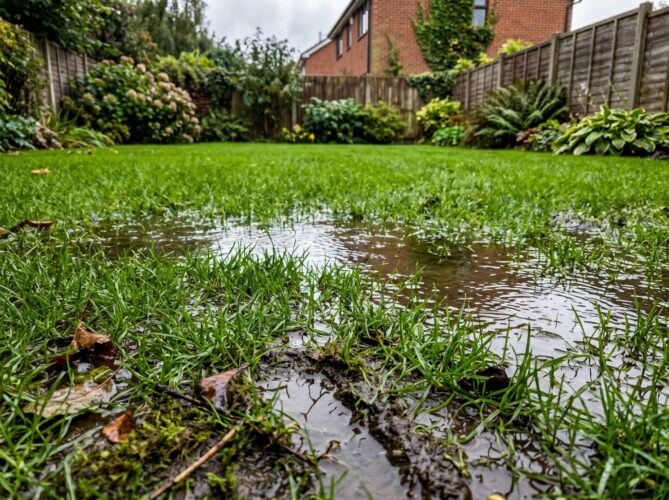
- Standing water after rainfall
- Soggy or muddy patches
- Yellowing grass
- Thin or patchy lawn growth
- Increased moss growth
- Water pooling near patios or pathways
If left untreated, excess moisture can weaken grass roots and create long-term lawn damage.
How to Improve Lawn Drainage
Aerate the Lawn Regularly
Aeration is one of the most effective ways to improve lawn drainage.
Compacted soil restricts the movement of water, air and nutrients through the ground. Hollow tine aeration creates small holes in the soil, allowing moisture to drain more effectively while encouraging healthier root growth.
Aeration can help to:
- Reduce soil compaction
- Improve water absorption
- Encourage deeper grass roots
- Improve airflow within the soil
- Support healthier lawn growth
Lawns that experience heavy foot traffic often benefit most from regular aeration.
Remove Excess Thatch
Thatch is a layer of dead grass, roots and organic material that builds up between the soil and the grass blades.
While a thin layer of thatch can be beneficial, excessive build-up prevents water from penetrating the soil properly.
Scarifying or de-thatching the lawn removes this barrier and allows water to move through the surface more effectively.
Removing excess thatch can also:
- Improve lawn drainage
- Encourage stronger root growth
- Reduce moss build-up
- Improve nutrient absorption
Improve Soil Structure
Heavy clay soils are particularly prone to drainage problems because they hold onto moisture for longer periods.
Improving soil structure can help water move more freely through the ground.
Does Sand Help Lawn Drainage?
Sand can improve drainage in clay-heavy soil when used correctly.
Mixing coarse sand into the soil creates more space between soil particles, helping water drain more efficiently. However, sand should not be used on its own.
For best results, sand should be combined with organic matter such as compost. This helps improve drainage while also adding nutrients that support healthy grass growth.
Applying too much sand without properly mixing it into the soil can sometimes make drainage problems worse by creating compacted layers that trap water.
Level Uneven Areas
Low spots and uneven areas in the lawn often collect water after rainfall.
Levelling these areas with additional soil can help water flow more evenly across the lawn instead of pooling in one place.
Once levelled, reseeding or laying fresh turf can help restore a healthy, even lawn surface.
Avoid Overwatering
Overwatering is a common cause of drainage problems.
Many lawns receive more water than they actually need, especially during periods of regular rainfall.
Before watering, check the moisture level of the soil to avoid adding unnecessary water. Moisture meters and rain gauges can help homeowners monitor conditions more accurately.
Allowing the lawn to dry slightly between watering sessions encourages stronger root growth and healthier turf overall.
Choose Grass Varieties Suited to Damp Conditions
Some grass types cope better with excess moisture than others.
If your garden regularly experiences wet conditions, choosing grass varieties that tolerate damp soil can help maintain a healthier lawn.
Certain ryegrasses and tall fescue varieties are often better suited to lawns with ongoing drainage challenges.
Improve Lawn Grading
The slope of your lawn plays an important role in drainage.
Lawns that slope towards buildings or patios are more likely to experience standing water and drainage issues.
Adjusting the grading so the lawn slopes gently away from structures can encourage natural water runoff and reduce pooling.
Proper grading can also help protect patios, pathways and property foundations from excess moisture.
Benefits of Improving Lawn Drainage
Improving drainage offers several long-term benefits for lawn health and garden maintenance.
These include:
- Healthier grass growth
- Reduced moss and algae
- Fewer muddy patches
- Stronger root systems
- Improved lawn appearance
- Better usability throughout the year
Well-drained lawns are also easier to maintain and recover more quickly after rainfall.
When to Consider Professional Lawn Care Support
Some drainage problems can be resolved with regular lawn maintenance, but severe issues may require professional support.
Professional lawn care specialists can assess soil conditions, identify underlying drainage issues and recommend treatments tailored to your lawn.
Services such as hollow tine aeration, scarification and soil improvement treatments can often make a significant difference to struggling lawns.
Frequently Asked Questions
Why does my lawn stay wet for so long after rain?
This is often caused by compacted soil, clay-heavy ground, poor drainage or uneven lawn surfaces that allow water to collect.
Is aeration good for lawn drainage?
Yes. Aeration improves airflow and water movement through the soil, helping reduce compaction and standing water.
Can too much watering damage a lawn?
Yes. Overwatering can weaken grass roots, increase moss growth and worsen drainage issues.
Should I add sand to my lawn?
Sand can help improve drainage in heavy soils when combined with compost or organic matter. Using sand incorrectly can sometimes create additional drainage problems.
Creating a Healthier, Better-Draining Lawn
Poor lawn drainage can affect both the appearance and health of your garden, but regular maintenance and the right treatments can make a major difference.
From aeration and scarification to soil improvement and levelling uneven areas, small changes can help lawns drain more effectively and stay healthier for longer.
For homeowners dealing with persistent drainage issues, professional lawn care services can help restore balance and create stronger, greener lawns that are easier to maintain.