
Coarse grass is one of the most common lawn problems in the UK. It’s thicker and tougher than the fine grasses around it, it grows faster, and it doesn’t stop over winter when everything else does. The result is a patchy, uneven lawn that never quite looks right no matter how often you mow it. This guide will walk you through everything you need to know to identify, understand, and get rid of it.
Step 1: Identify coarse grass
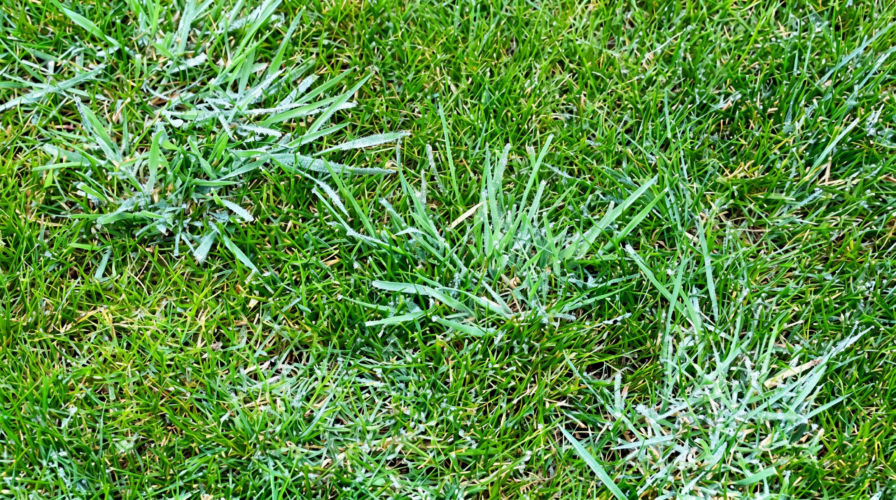
Before you do anything, make sure you’re actually dealing with coarse grass. Look for patches that are noticeably thicker or broader than the grass around them, often a slightly different shade of green. They may feel rougher underfoot and tend to grow in clumps rather than blending in with the surrounding turf. Coarse grass is particularly easy to spot in autumn and winter, when the fine grasses around it stop growing and the contrast becomes much more obvious.
Step 2: Understand why it’s there
Knowing the cause helps you treat it properly and avoid it coming back. Coarse grass usually appears for one of the following reasons:
- Seeds have been carried onto your lawn by birds, pets, the wind, or mud on footwear
- Your lawn has been under stress from drought, soil compaction, or being cut too short
- Fine grasses have thinned out over winter, giving coarser varieties room to spread
- Dormant seeds already present in the soil have germinated, particularly in newer lawns
Step 3: Adjust your mowing routine
Regular mowing is one of your most powerful weapons against coarse grass. Cutting weakens it over time, so staying consistent with your mowing schedule puts it under constant pressure. Before each mow, rake the lawn lightly to lift any coarse patches upright so the blades can cut them properly. Avoid cutting too short, as scalping the lawn stresses your fine grasses and makes it easier for coarser varieties to take hold.
Step 4: Remove patches by hand
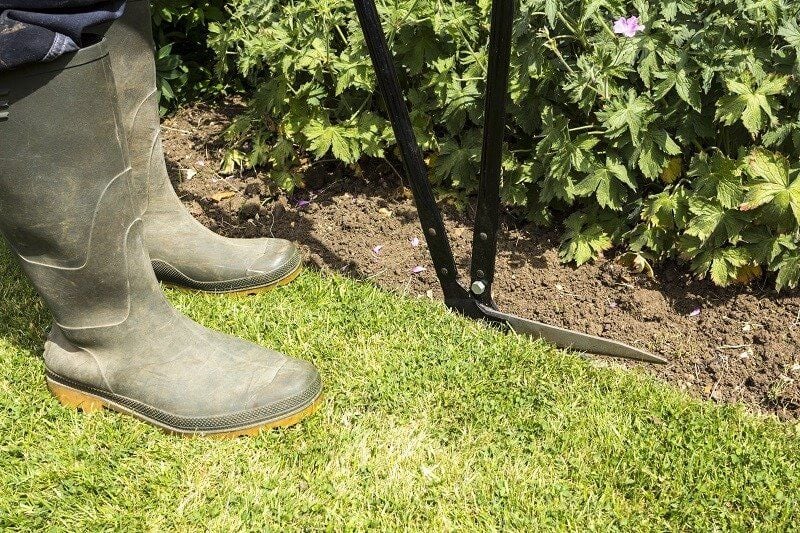
For smaller or isolated clumps, manual removal is the most reliable approach. Dig out the entire patch, roots and all, and dispose of it away from your garden. This will leave a bare patch, but that’s not a bad thing. It gives your fine grasses the space they need to spread back in and fill the gap naturally.
Step 5: Re-seed any larger areas
Where coarse grass has spread across a bigger section of your lawn, more thorough action is needed. Fork out the affected area completely, work in some fresh topsoil to improve the growing conditions, and re-seed with a quality fine lawn seed. Keep the area well watered and avoid heavy foot traffic while it establishes. Within a few weeks you should begin to see new growth coming through.
Step 6: Feed your lawn
A well-fed lawn is far better equipped to resist coarse grass. Apply a fertiliser that is high in nitrogen to encourage strong, dense growth in your desirable grasses. When fine grasses are thick and healthy, they naturally crowd out coarser invaders and leave less room for them to establish. Aim to feed your lawn at least twice a year, in spring and autumn, as part of your regular maintenance routine.
Step 7: Stay consistent
This is arguably the most important step of all. Coarse grass doesn’t disappear overnight, and a single treatment won’t solve the problem permanently. The lawns that stay in the best condition are the ones whose owners mow regularly, feed on schedule, and deal with any new patches as soon as they appear rather than letting them spread. Make coarse grass management a part of your regular lawn care routine and it will become much easier to stay on top of.
A note on spraying
It’s worth knowing that there is no selective herbicide available that will kill coarse grass without also damaging the fine grasses around it. Any product strong enough to remove it will cause wider damage to your lawn. Manual removal and good lawn care habits are the only reliable methods, so don’t be tempted by any product that claims otherwise.
When to call in a professional
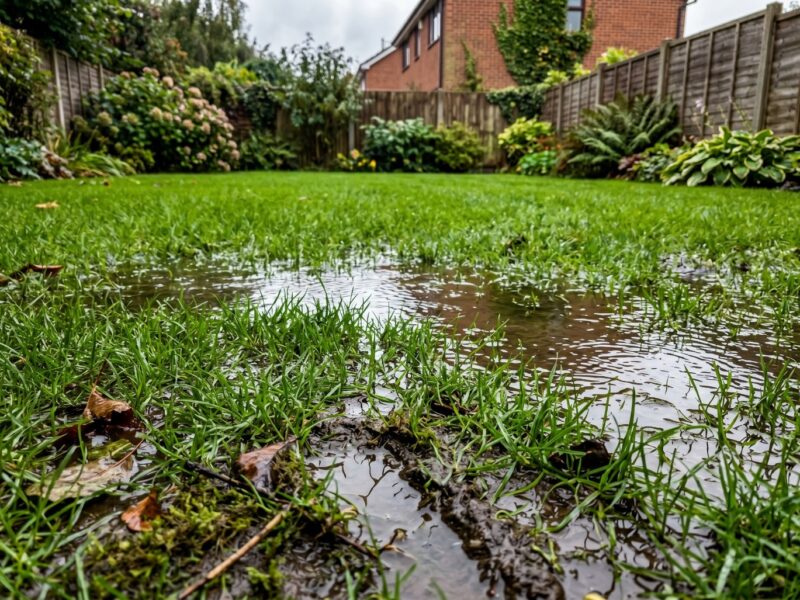
If coarse grass keeps coming back despite your best efforts, or if it has taken over a significant portion of your lawn, it may be time to get a professional assessment. In some cases, persistent coarse grass is a symptom of a deeper issue with soil health or drainage that needs addressing before the lawn can fully recover. A professional can identify the root cause and recommend the right course of action to get your lawn back to its best.